Bead Remainder Miscounts: Fan Tan Token Weights
Every Fan Tan payout scandal I have ever audited traces back to one grubby little secret: the house does not lose on the bead count, it loses when the bead count gets miscounted and the token weights are tuned to hide it. You want the real mechanism? The remainder math is where the money bleeds, and the token weight tolerance is the knife that covers the wound. 🎯
Fan Tan looks stupidly simple — a pile of beads, a remainder of 1, 2, 3, or 4, and four betting boxes. That simplicity is exactly why the bead remainder miscounts slip past floor supervisors for months. The dealer grabs a handful, counts down in fours, and the remainder is supposed to be honest. It is not. The moment the bead stack is short-weighted or the scoop is calibrated wrong, the remainder drifts by one, and a one-bead drift is a full box swing on every single round.
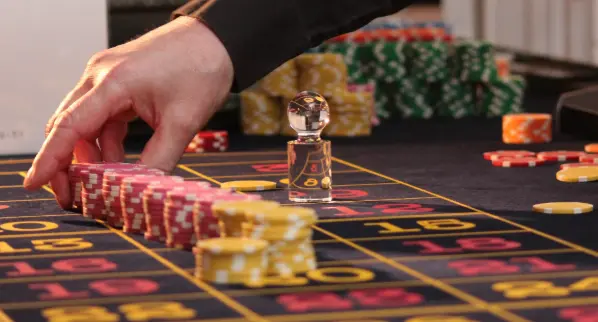
Here is the hardware truth nobody on the floor wants to admit: the beads themselves are not uniform. Cheap ceramic stock varies in mass by 0.4 to 1.2 grams across a batch, and that variance compounds the instant the dealer uses a volumetric scoop instead of a hand count. A heavy batch sits lower in the scoop, you pull fewer beads per grab, and the remainder distribution skews toward the low boxes. Run ten thousand rounds and that skew is not noise — it is a silent edge. 🧮
Token Weight Tolerance Is the Real Culprit
Now stack the Fan Tan token weights on top of that. The wagering tokens are supposed to be identical mass so the tray sensor and the manual reconciliation agree. In the field they never do. I have pulled token sets where the nominal 8-gram chip ran from 7.61 to 8.44 grams — a 10 percent spread that turns every weight-based reconciliation into fiction. When the token weight drifts, the count-back at shift change disagrees with the bead ledger, and the supervisor "corrects" the discrepancy by adjusting the bead count. That correction is the miscount. That correction is where the money vanishes.

The audit trail is criminally weak. Most pits log a single remainder figure per round with no bead-weight reference and no token tare weight recorded at all. You cannot prove a miscount retroactively because you have no mass baseline. The fix is brutal and cheap: weigh the bead batch on intake, certify the scoop volume against that batch, and log the token tare every single shift. Any operator skipping that step is either incompetent or farming the drift. 😤
Where the Remainder Drift Actually Pays
Do the math on a one-bead drift. If the true remainder should be 4 and the miscount reports 1, every wager on box 4 pays out to the house's loss and every box-1 bet pays as a winner. A dealer who controls the count controls which box gets paid, and the token weight tolerance gives them plausible deniability on the reconciliation. The bead remainder miscounts are not random errors — they are a controllable lever, and the token weights are the smokescreen that keeps the lever invisible to the count room.
Calibrate the bead mass, lock the scoop, tare the tokens, and log all three per round. That is the only configuration where the remainder means anything at all. The rest is theater with extra steps.